Pioneering
Creative
Excellence
supamakers.com

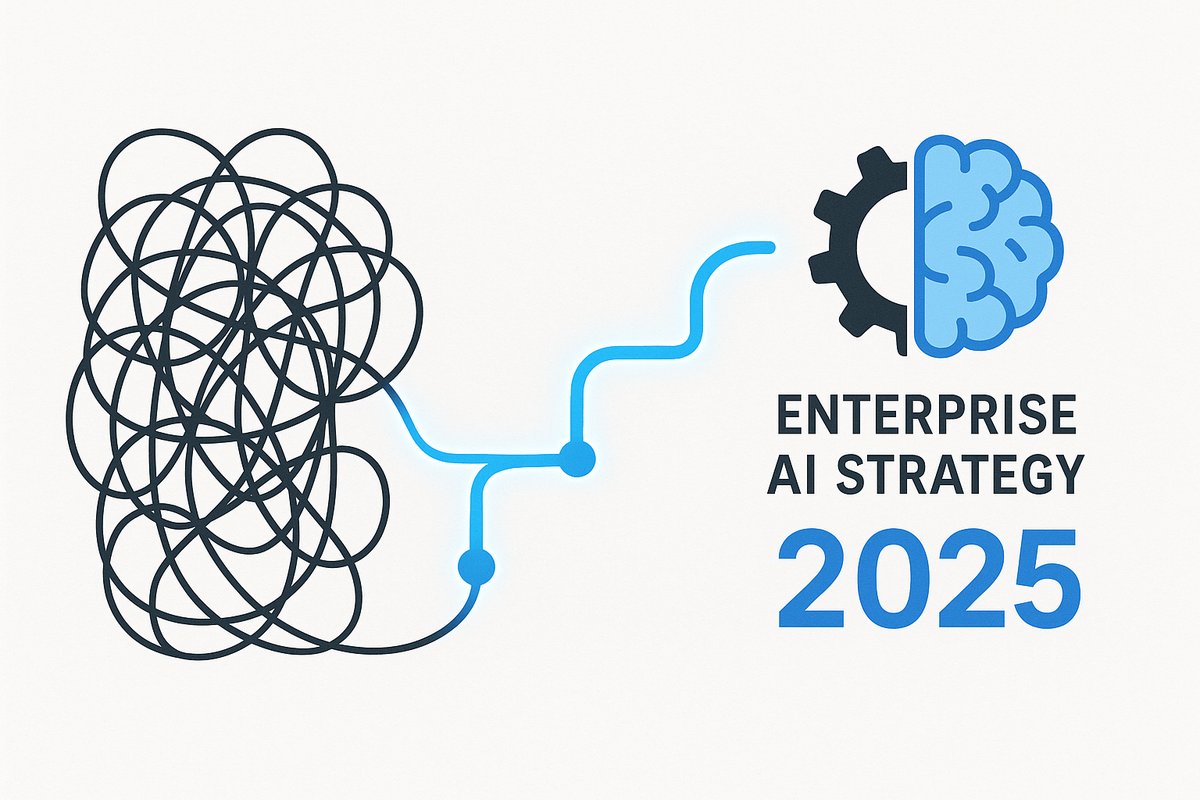
A 2025 PwC report on enterprise adoption reveals a stark reality: firms with a formal AI strategy are more than twice as likely to report significant revenue growth compared to their peers. For today's enterprise leaders, inaction is no longer a choice; it's an existential threat. Yet, many organizations are paralyzed, facing a chaotic internal landscape of uncontrolled 'Shadow AI' and struggling to prove a clear return on investment.
This playbook provides the definitive, step-by-step framework to transform artificial intelligence from a chaotic risk into a strategic, revenue-driving asset for 2025 and beyond.
Adopting a formal AI strategy is not just about gaining a competitive edge; it's a critical requirement for survival and leadership in an increasingly intelligent world.
Step 1: Conduct a Comprehensive AI Readiness Assessment
Before you can build a forward-looking roadmap, you must have an unflinching understanding of your starting point. A rigorous internal audit of your organization's current capabilities is the foundational first step, preventing costly mistakes and misaligned projects down the line.
Evaluate Your Data Infrastructure and Governance
Your AI ambitions are only as strong as your data foundation. Begin by evaluating:
- Data Quality: Is your data accurate, complete, consistent, and timely?
- Accessibility: Is data siloed in legacy systems, or accessible to the teams that need it?
- Security: Are robust security measures in place to protect sensitive data?
- Governance & Compliance: Do you have a clear framework for data ownership and usage rights?
Map Your Current Technology Stack
Audit your existing technology landscape to identify gaps and opportunities. Can your current cloud infrastructure support machine learning models? Do your analytics tools have AI/ML capabilities you can leverage?
Analyze Your In-House AI Talent
AI success is as much about people as technology. Identify key roles needed: Data Scientists, ML Engineers, AI Product Managers, and Data Engineers. Determine whether you'll bridge gaps through hiring, upskilling, or strategic partnerships.
Step 2: Establish a Governance-First Ethical AI Framework
Proactive governance is the immune system for your enterprise AI strategy. In an era of powerful generative AI tools, establishing clear rules and guardrails is essential.
What is 'Shadow AI'?
One of the most pressing threats to enterprises in 2025 is 'Shadow AI'—the unsanctioned use of AI tools by employees outside of IT's purview. While often well-intentioned, this practice introduces profound security, compliance, and financial risks.
To manage this hidden risk:
- Discover: Utilize network monitoring to identify unsanctioned AI applications
- Assess: Evaluate the risk profile of each discovered tool
- Manage: Create clear policies that define approved tools and a process to request new ones
Building Your AI Risk Management Protocol
Build upon established standards like the NIST AI Risk Management Framework, which provides a structured approach to mapping, measuring, and managing AI-related risks throughout the entire lifecycle.
Step 3: Align AI with Business Goals & Build the Financial Case
For an AI strategy to succeed, it must be inextricably linked to core business objectives. Every AI project must have a clear purpose and deliver measurable value.
Linking AI Initiatives to Strategic Objectives
Bring together leaders from IT, finance, operations, and marketing to brainstorm and prioritize potential AI use cases. Categorize each potential project on an impact vs. feasibility matrix:
- Revenue Growth: AI-powered lead scoring, dynamic pricing, personalized marketing
- Cost Reduction: Automating back-office processes, optimizing supply chains
- Customer Experience: AI-driven chatbots, personalized recommendations
Defining Business-Centric KPIs
To gain C-suite buy-in, define KPIs that connect directly to business outcomes:
- For Sales AI: Increase in lead-to-opportunity conversion rate by X%
- For Operations AI: Reduction in operational overhead by Y%
- For Customer Service AI: Decrease in average handling time by Z seconds
Step 4: Design and Deploy Your Phased AI Strategy Roadmap
A common pitfall is attempting a 'big bang' deployment. A far more effective approach is an iterative, phased rollout.
Phase 1: Pilot Projects & Early Wins (Months 1-6)
Select one or two high-impact, low-risk pilot projects. These initial tests are crucial for securing buy-in for your broader vision. Assemble a cross-functional team and define crystal-clear success criteria before you begin.
Phase 2: Scaling Success (Months 7-18)
Take lessons learned from pilots to standardize toolsets, refine governance protocols, and build infrastructure for wider adoption. Make strategic investments in talent and training programs.
Phase 3: Full-Scale Integration (Months 19+)
Establish an AI Center of Excellence (CoE) to centralize expertise, promote best practices, and drive continuous innovation. Monitor deployed models and scan for new opportunities.
The Path Forward
The path to transforming AI from a source of chaos into a strategic asset is clear:
- Assess your readiness
- Govern with a risk-first mindset
- Align every initiative to business goals
- Execute with a phased roadmap
Your AI roadmap should be a living document, reviewed and updated quarterly to adapt to the rapid pace of technological change and evolving business needs.
Ready to turn your AI chaos into a competitive advantage? Contact the experts at SupaMakers for a personalized AI strategy consultation.
Key Takeaways
Before building your roadmap, perform a rigorous internal audit of your data infrastructure, technology stack, and in-house talent. Actively combat 'Shadow AI' risks and define success with business-centric KPIs.

